


Prix Nobel de chimie 2024: David Baker, Demis Hassabis et John M. Jumper : La révolution de l’intelligence artificielle en biologie structurale
| dc.contributor.author | Aguéro-Pizzolo, Stéphanie | - |
| dc.contributor.author | Bettler, Emmanuel | - |
| dc.contributor.author | Gouet, Patrice | - |
| dc.date.accessioned | 2026-02-06T14:14:21Z | |
| dc.date.available | 2026-02-06T14:14:21Z | |
| dc.date.issued | 2025 | |
| dc.identifier.citation | Aguéro-Pizzolo, Stéphanie ; Bettler, Emmanuel ; Gouet, Patrice ; Prix Nobel de chimie 2024: David Baker, Demis Hassabis et John M. Jumper : La révolution de l’intelligence artificielle en biologie structurale, Med Sci (Paris), Vol. 41, N° 4 ; p. 367-373 ; DOI : 10.1051/medsci/2025060 | |
| dc.identifier.issn | 1958-5381 | |
| dc.identifier.uri | http://hdl.handle.net/10608/15388 | |
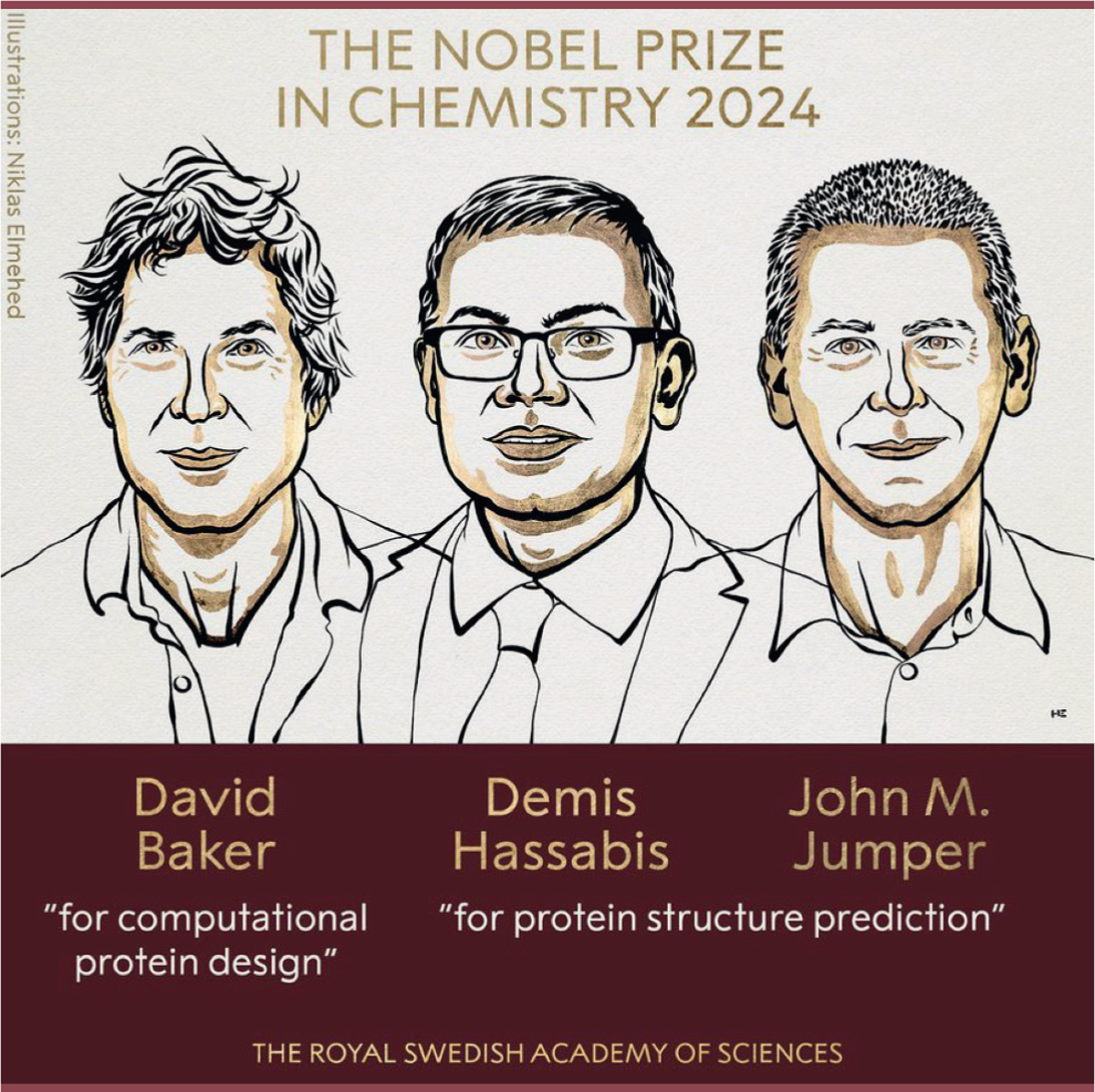
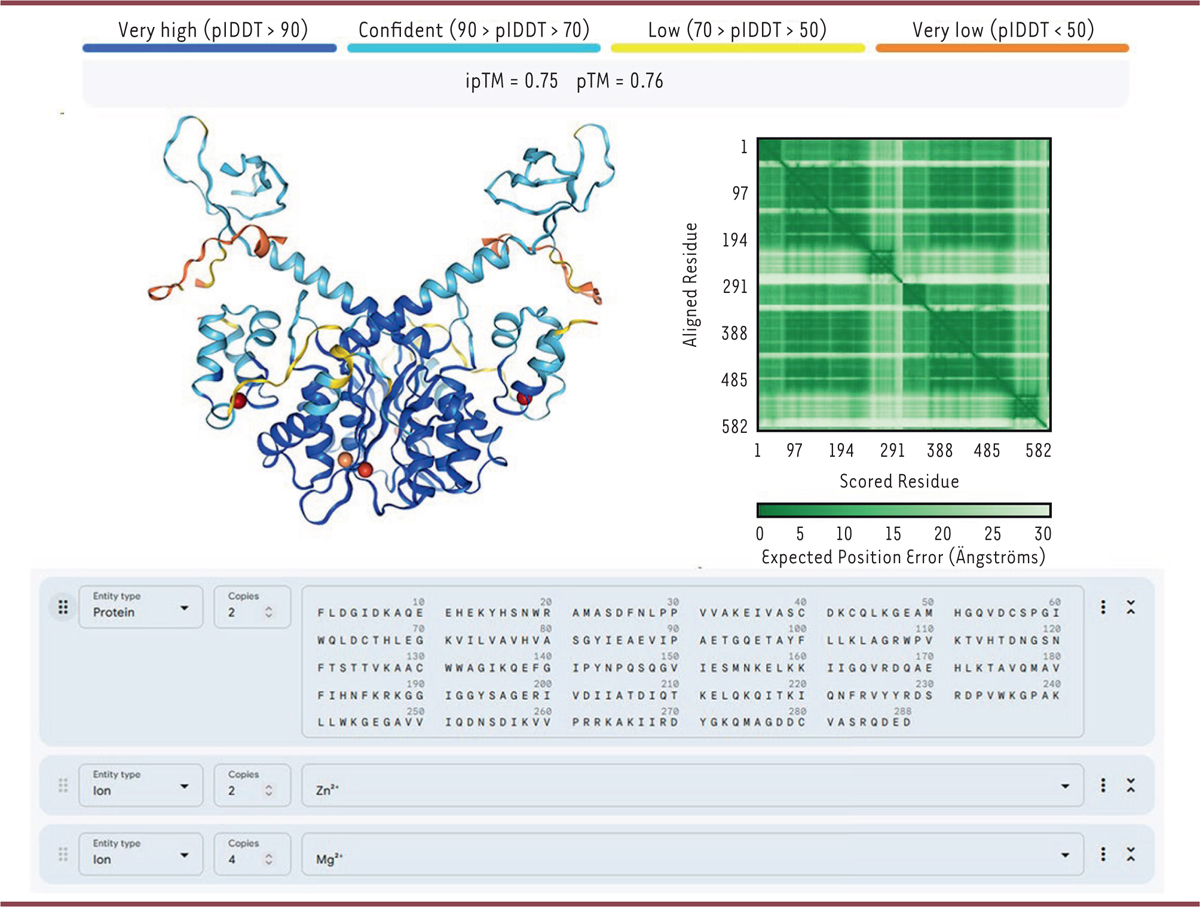
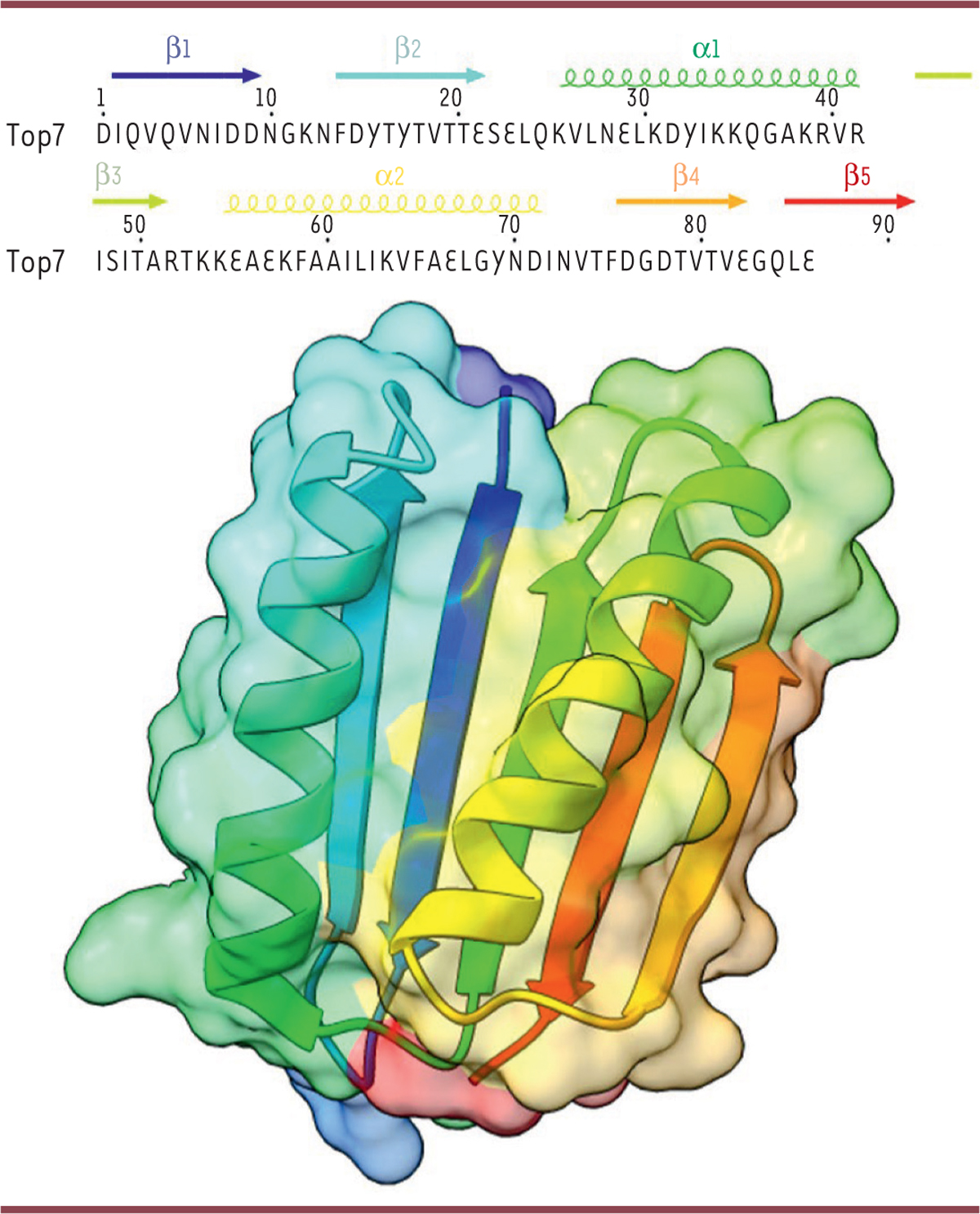
| dc.description.abstract | Le Prix Nobel de chimie 2024 a été décerné à Demis Hassabis et John M. Jumper (société Google DeepMind ) pour leurs travaux sur la prédiction des structures protéiques guidée par l’intelligence artificielle (IA), et à David Baker (Université de Washington, Seattle, États-Unis) pour les siens sur la conception computationnelle des protéines. Cet évènement marque une révolution dans le domaine de la biologie structurale et a conduit, entre autres, à la génération d’une bibliothèque de près de 200 millions de structures prédites de protéines destinée à accélérer la recherche. Cette révolution de l’IA a également permis la conception de plusieurs protéines artificielles d’intérêt médical présentées dans cette revue. | fr |
| dc.description.abstract | The 2024 Nobel Prize in chemistry has been awarded to Demis Hassabis and John M. Jumper ( Google DeepMind ) for the development of artificial intelligence-guided protein structure prediction and to David Baker (University of Washington, Seattle, USA) for the development of computational protein design. This event marks a revolution in the field of structural biology that has led, among other things, to the generation of a library of nearly 200 million predicted protein structures designed to speed up research. This revolution in AI has also led to the design of several artificial proteins of medical interest presented in this review. | en |
| dc.language.iso | fr | |
| dc.publisher | EDP Sciences | |
| dc.relation.ispartof | Prix Nobel | |
| dc.rights | Article en libre accès - License CC BY 4.0 | fr |
| dc.rights | Médecine/Sciences - Inserm - SRMS | fr |
| dc.rights.uri | http://creativecommons.org/licenses/by/4.0 | |
| dc.source | M/S. Médecine sciences [ISSN papier : 0767-0974 ; ISSN numérique : 1958-5381], Vol. 41, N° 4; p. 367-373 | |
| dc.subject.mesh | Intelligence artificielle | fr |
| dc.subject.mesh | histoire | fr |
| dc.subject.mesh | Prix Nobel | fr |
| dc.subject.mesh | Histoire du 21ème siècle | fr |
| dc.subject.mesh | Humains | fr |
| dc.subject.mesh | Histoire du 20ème siècle | fr |
| dc.subject.mesh | Chimie | fr |
| dc.subject.mesh | histoire | fr |
| dc.subject.mesh | Biologie informatique | fr |
| dc.subject.mesh | méthodes | fr |
| dc.subject.mesh | Conformation des protéines | fr |
| dc.subject.mesh | Protéines | fr |
| dc.subject.mesh | composition chimique | fr |
| dc.title | Prix Nobel de chimie 2024: David Baker, Demis Hassabis et John M. Jumper : La révolution de l’intelligence artificielle en biologie structurale | fr |
| dc.title.alternative | Nobel Prize in chemistry 2024: David Baker, Demis Hassabis et John M. Jumper. The revolution of artificial intelligence in structural biology | en |
| dc.type | Article | |
| dc.contributor.affiliation | Laboratoire de biologie tissulaire et ingénierie thérapeutique, CNRS UMR 5305, Université Lyon-1 , Lyon , France | |
| dc.contributor.affiliation | Laboratoire de microbiologie moléculaire et de biochimie structurale, CNRS UMR 5086, Université Lyon-1 , Lyon , France | |
| dc.identifier.doi | 10.1051/medsci/2025060 | |
| dc.identifier.pmid | 40294296 |
Fichier(s) constituant ce document
Ce document figure dans la(les) collection(s) suivante(s)

Excepté là où spécifié autrement, la license de ce document est décrite en tant que Article en libre accès - License CC BY 4.0